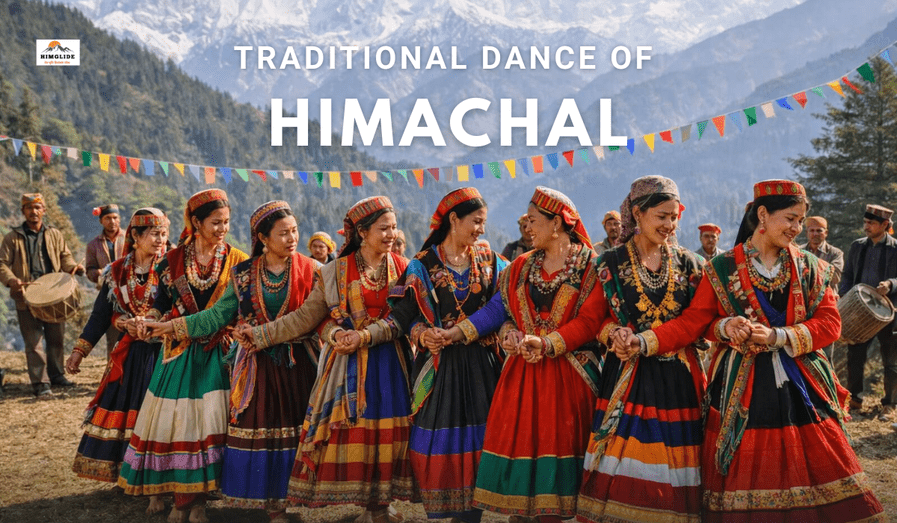
The traditional dance of Himachal Pradesh is a vibrant reflection of the state’s culture, festivals, spirituality, and community life. In the mountainous villages of Himachal, dance is not just a performance — it is a way of celebration, devotion, storytelling, and social connection.
From harvest festivals and weddings to temple fairs and religious rituals, folk dances are deeply woven into everyday life. Each district has its own unique dance style, rhythm, costumes, and cultural meaning, making Himachal Pradesh one of India’s richest regions in folk traditions.
This detailed guide explores the famous traditional dances of Himachal Pradesh, their history, cultural significance, district-wise variations, costumes, and importance in modern tourism.
Cultural Importance of Traditional Dance in Himachal Pradesh
In Himachali society, dance is closely linked with nature, agriculture, and local deities. Villagers gather in open spaces, temple courtyards, or festival grounds and perform group dances accompanied by traditional instruments.
Why folk dance is important
- Celebrates seasonal cycles and harvest
- Expresses devotion to village deities
- Strengthens community bonding
- Preserves tribal traditions
- Represents regional identity
- Passes culture to younger generations
Unlike many classical dances, Himachali dances are participatory — meaning everyone can join.
Read More: Famous Food of Himachal Pradesh?
Famous Traditional Dances of Himachal Pradesh
1️⃣Nati — The Most Popular Folk Dance
Nati is the most famous and widely performed folk dance of Himachal Pradesh. It is especially popular in Kullu, Shimla, Sirmaur, and Kinnaur.
The dance is known for slow, synchronized steps, graceful hand movements, and large group participation. Dancers usually form a circle or line and move rhythmically to traditional music.
Key features
- Performed during fairs, weddings, and festivals
- One of the largest group folk dances in the world
- Different regional variations (Kullu Nati, Sirmauri Nati, etc.)
- Simple steps that allow community participation
Nati represents joy, unity, and celebration of life.
2️⃣ Chham — Sacred Mask Dance
Chham is a sacred masked dance performed in Buddhist monasteries of Lahaul-Spiti and Kinnaur. It has deep religious meaning and represents the triumph of good over evil.
The dance is performed by monks wearing elaborate masks and symbolic costumes.
Highlights
- Ritual dance connected with Buddhist festivals
- Uses mythological characters
- Strong spiritual symbolism
- Performed in monastery courtyards
Chham is both a cultural and religious performance.
3️⃣ Kayang — Graceful Circle Dance of Kinnaur
Kayang is a traditional group dance from Kinnaur district performed during festivals, weddings, and social gatherings.
The dance is characterized by circular formation, synchronized steps, and elegant hand movements.
What makes Kayang unique
- Performed mainly by women
- Strong connection with local festivals
- Traditional Kinnauri dress and jewellery
- Calm and graceful rhythm
Kayang reflects the peaceful lifestyle of mountain communities.
4️⃣ Dangi — Festival Dance of Chamba
Dangi dance is popular in Chamba district and is commonly performed during fairs and community celebrations.
It represents local lifestyle, traditions, and festive joy.
5️⃣ Rakshasa — Dramatic Folk Performance
Rakshasa dance is a dramatic dance form based on mythological storytelling. It often involves masks, theatrical expressions, and symbolic characters.
This dance highlights storytelling traditions in Himachali culture.
District-Wise Traditional Dances of Himachal Pradesh
Different districts of Himachal Pradesh have unique dance traditions shaped by geography, religion, and community lifestyle.
Major district dance mapping
- Kullu — Nati
- Shimla — Nati
- Kinnaur — Kayang, Chham
- Lahaul-Spiti — Chham
- Chamba — Dangi
- Kangra — Jhamakda
- Sirmaur — Nati
- Una & Bilaspur — local folk variations
This diversity makes Himachal culturally rich.
Traditional Music Used in Himachali Dances
Music plays a central role in folk dance performances.
Common instruments
- Dhol
- Nagara
- Shehnai
- Karnal
- Flute
- Damru
The rhythm is usually slow and repetitive, helping dancers move in synchronization.
Traditional Costumes Used in Himachali Folk Dance
Costumes vary across districts but share common elements reflecting mountain climate and local identity.
Costume elements
- Himachali caps (topi)
- Woolen shawls
- Silver jewellery
- Dohru (traditional women dress)
- Chola and suthan (men attire)
Costumes enhance visual appeal and cultural authenticity.
Role of Traditional Dance in Festivals
Folk dances are central to Himachali festivals and fairs.
Where dances are commonly performed
- Temple fairs
- Harvest festivals
- Weddings
- Local deity processions
- Seasonal celebrations
- Tribal festivals
Dance is often the highlight of these events.
Tribal Influence on Himachali Dances
Tribal communities of Kinnaur, Lahaul-Spiti, and Pangi region strongly influence dance traditions.
Characteristics of tribal dances:
- Slow rhythmic movements
- Symbolic gestures
- Ritual significance
- Community participation
- Nature-inspired themes
This influence makes Himachali dance unique compared to plains regions.
Modern Importance & Tourism Impact
Traditional dances play a major role in promoting cultural tourism in Himachal Pradesh.
Tourism benefits
- Cultural festivals attract visitors
- Dance performances showcase heritage
- Supports local artists
- Preserves traditional knowledge
- Enhances destination experience
Events like Kullu Dussehra often highlight folk dance performances.
Why Traditional Dance of Himachal Pradesh is Unique
Several factors make Himachali folk dances special:
- Strong connection with local deities
- Group participation rather than solo performance
- Region-specific variations
- Blend of tribal and rural traditions
- Simplicity and natural rhythm
- Cultural storytelling
These dances represent authentic mountain culture.
Future of Himachali Folk Dances
With modernization, there is growing awareness about preserving traditional dance.
Preservation efforts
- Cultural festivals
- School programs
- Tourism events
- Government initiatives
- Digital documentation
Younger generations are increasingly learning folk dances, ensuring continuity.
FAQ’s
Q: What is the most famous traditional dance of Himachal Pradesh?
A: The most famous dance is Nati. It is widely performed during festivals, weddings, and fairs, known for its slow rhythmic steps and group coordination. Nati is considered the cultural identity of Himachal Pradesh.
Q: Which district is famous for Nati dance?
A: Kullu district is most famous for Nati dance. The dance is commonly performed during festivals and large cultural celebrations where many people participate together.
Q: What is the mask dance of Himachal Pradesh?
A: The mask dance is Chham, a sacred monastery dance where monks wear masks and perform spiritual stories symbolizing the victory of good over evil.
Q: Are Himachali dances group dances?
A: Yes, most Himachali dances are group dances performed in circles or lines, reflecting community bonding and collective celebration.
Q: Why are traditional dances important in Himachal Pradesh?
A: They preserve culture, celebrate festivals, support local artists, promote tourism, and pass traditions to future generations.
Conclusion
The traditional dance of Himachal Pradesh is a living expression of mountain life, spirituality, and celebration. From the joyful Nati dance to sacred monastery performances like Chham, each dance reflects the cultural richness of the region.
These folk dances are not just performances — they are a way of preserving history, strengthening communities, and sharing Himachali identity with the world.
As tourism grows and cultural awareness increases, traditional dances continue to play a vital role in keeping the heritage of Himachal Pradesh alive.