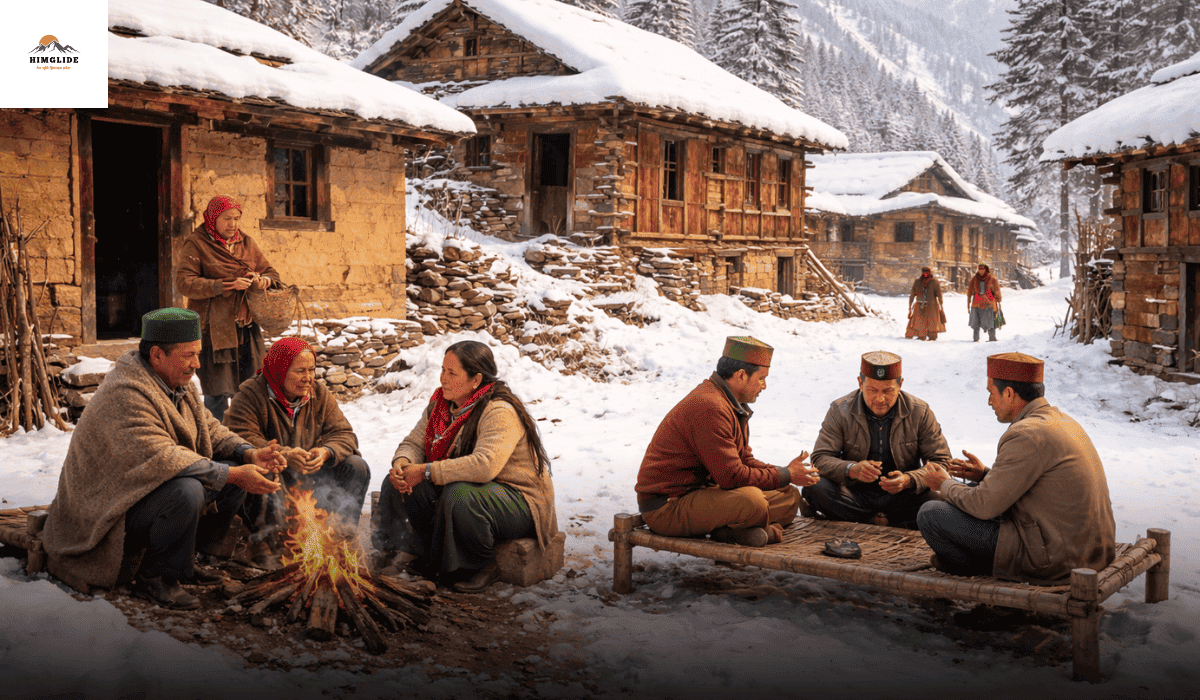
Winter in Himachal Pradesh is not just about snowfall and tourism. It is a season that truly reveals the real Himachali lifestyle. When roads slow down, tourists reduce, and snow covers rooftops, village life comes alive with warmth, traditions, and strong community bonding.
If you want to understand the Himachali lifestyle in winter, visiting local villages is the best way. From wooden homes and traditional food to winter festivals and daily routines, these villages show how locals live peacefully with nature during harsh winters.
This guide shares the best villages to see Himachali lifestyle in winter, based on real travel experiences, local interactions, and seasonal insights.
Why Winter Is the Best Time to See Real Himachali Lifestyle
In summer, many villages change due to tourism. But winter is different. When tourist movement slows down, villages return to their original rhythm. Life becomes quiet, slow, and deeply traditional. This is the season when the true Himachali lifestyle can be seen and felt.
What Makes Winter Special in Himachal Villages?
- Traditional wooden houses stay warm without heaters
- Locals wear woollen clothes made at home
- Food is simple, seasonal, and nutritious
- Villagers depend on each other more than ever
- Old customs and rituals are followed daily
From my experience traveling through Himachal villages in December and January, winter shows the true survival skills and cultural strength of mountain communities.
Best Villages to Experience Himachali Lifestyle in Winter
Below are some of the best villages where winter lifestyle is authentic, slow, and deeply cultural.
1. Malana Village – Ancient Traditions in Snow (Kullu)
Malana is one of the most unique villages in Himachal Pradesh. In winter, the village becomes quiet, mystical, and deeply traditional.
Winter Lifestyle in Malana
- Homes made of stone and wood retain heat naturally
- Locals depend on stored grains and dry vegetables
- Daily life follows village rules and customs
- Elders play a key role in decision-making
During winter, Malana feels untouched by modern influence. Snowfall limits movement, so people spend evenings around traditional fireplaces (tandoor-style chulhas), sharing stories.
2. Kalpa Village – Apple Orchards & Winter Calm (Kinnaur)
Kalpa offers one of the most peaceful winter lifestyles in Himachal.
How Locals Live in Winter in Kalpa
- Apple orchards remain snow-covered
- Villagers repair homes and tools indoors
- Winter prayers are common in monasteries
- Meals include barley, rajma, and local butter tea
Staying in a local homestay here gives you firsthand experience of Kinnauri winter food and slow village routines.
3. Nako Village – High-Altitude Winter Survival (Spiti)
Nako is one of the best places to understand Himachali lifestyle in extreme winter.
Winter Life in Nako
- Temperatures drop below zero
- Roads often close due to snow
- Villagers store food for 4–5 months
- Community support is strong
People wake up early to clear snow, feed animals, and light traditional heaters. Electricity is limited, so life follows sunlight.
4. Tosh Village – Simple Life in Parvati Valley Winter
Tosh village becomes calm and soulful in winter.
What You’ll See in Winter
- Snow-covered wooden houses
- Locals knitting woollens indoors
- Traditional food like siddu and thukpa
- Peaceful evenings with valley views
Winter stays in Tosh are ideal for travelers who want to understand local life without crowds.
5. Sangla Village – Baspa Valley’s Winter Traditions
Sangla is perfect for those wanting a mix of culture and scenic winter beauty.
Himachali Winter Lifestyle in Sangla
- Locals wear traditional Kinnauri caps
- Wood-based architecture keeps homes warm
- Winter meals are simple and energy-rich
- Folk songs and storytelling are common
Winters are considered a time for family bonding and spiritual reflection.
6. Gushaini Village – Authentic Tirthan Valley Life
Gushaini shows how Himachali villages function smoothly even in winter.
Daily Life in Winter
- Farming pauses, fishing continues
- Locals focus on handicrafts
- Firewood is stored carefully
- Evenings are slow and social
Talk to village elders to understand how winters have changed over generations.
Read More: Traditional Foods of Himachal Pradesh?
Traditional Himachali Food in Winter Villages
Food plays a big role in Himachali lifestyle in winter.
Common Winter Foods
- Siddu – Steamed wheat bread
- Madra – Chickpea curry with yogurt
- Chilra – Local pancake
- Thukpa – Popular in high-altitude villages
- Butter tea – Especially in Kinnaur and Spiti
These foods are high in calories and help locals stay warm naturally.
Winter Clothing & Wool Traditions in Himachal
Locals mostly rely on handmade woollens.
What Villagers Wear
- Woollen caps (Topi)
- Pattu shawls
- Hand-knitted socks and gloves
- Layered clothing instead of heavy jackets
Many families still spin and weave wool at home during winter months.
How Villages Prepare for Winter in Himachal
Preparation starts months in advance.
Winter Readiness Includes
- Storing grains and pulses
- Collecting firewood
- Drying vegetables
- Repairing roofs before snowfall
This planning shows the self-sufficient lifestyle of Himachali villages.
Responsible Travel Tips for Winter Village Visits
If you plan to visit villages in winter:
- Respect local customs
- Avoid plastic use
- Support local homestays
- Do not disturb daily routines
- Ask before taking photos
Traveling responsibly helps preserve the true Himachali lifestyle.
FAQ’s
What is Himachali lifestyle like in winter?
Himachali lifestyle in winter is slow, traditional, and community-based. People depend on stored food, handmade woollen clothes, and strong family and neighbour support to manage the cold season.
Which villages show real Himachali winter lifestyle?
Malana, Kalpa, Nako, Sangla, Tosh, and Gushaini are some of the best villages to experience authentic Himachali winter life, with snowfall, traditions, and limited tourism.
Is it safe to visit Himachal villages in winter?
Yes, winter travel is safe if planned well. Check weather updates, choose accessible villages, and follow local advice for a comfortable stay.
What do Himachali people eat in winter?
Winter food includes siddu, madra, rajma, barley dishes, thukpa, and butter tea. These meals are warm, nutritious, and suitable for cold weather.
Can tourists stay in villages during winter?
Yes, many village homestays stay open in winter and offer a chance to experience local food, culture, and daily life closely.
Why is winter important for Himachali culture?
Winter is a time for family bonding, spiritual practices, and preserving traditions through rituals and storytelling.
Final Thoughts
To truly understand the Himachali lifestyle in winter, you must slow down, stay in villages, eat local food, and observe daily life. Winter strips away tourism layers and reveals the heart of Himachal Pradesh—simple living, resilience, and deep cultural roots.
If you want to travel Himachal like a local, winter village experiences are unforgettable.